
Manual Hose Crimping Machines: Compact Size, Immense Power—Unlocking a New Experience in Fluid Line Connections
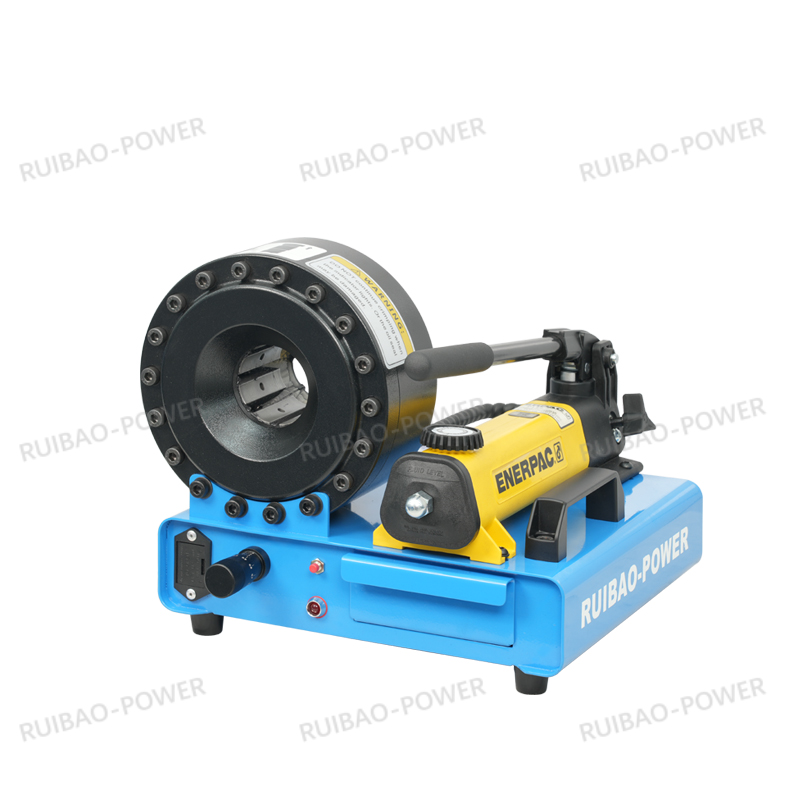
Manual Hose Crimping Machines: Compact Size, Immense Power—Unlocking a New Experience in Fluid Line Connections
Fluid line connection constitutes a fundamental link in industrial production, engineering construction, and routine maintenance, with its quality directly impacting operational safety and efficiency. As various industries increasingly demand greater precision and convenience in fluid line connections, manual hose crimping machines have gradually supplanted traditional crimping methods. Thanks to their unique advantages—including flexible adaptability, simple operation, and independence from external power sources—they have emerged as the tool of choice for a growing number of professionals. This article offers a comprehensive analysis of the practical value of manual hose crimping machines, examining four key aspects: industry pain points, core advantages, real-world applications, and key purchasing considerations. Our aim is to help readers gain a deeper understanding of this "compact yet powerful" essential tool for fluid line connections.
I. Emerging Industry Pain Points: The Rise of the Manual Hose Crimping Machine
In a wide variety of settings—including hydraulic system repair, construction, agricultural machinery maintenance, and residential plumbing installation—the quality of pipe connections directly determines operational efficiency, safety levels, and future maintenance costs; it constitutes an indispensable and critical link within the entire workflow. For a long time, numerous industry professionals have been plagued by the challenges associated with pipe connections. Broadly speaking, these issues can be summarized into three core pain points: First, outdoor operations are often constrained by power supply limitations. Large-scale hydraulic crimping machines are bulky and heavy; not only are they difficult to transport, but they also rely on external power sources. Consequently, they are completely unusable in power-free environments—such as remote wilderness areas or open fields—often causing significant delays in emergency repair schedules. Second, crimping precision is frequently inadequate. Traditional manual hammering methods are not only physically strenuous but also prone to issues such as uneven crimping and joint deformation. Furthermore, small, rudimentary devices struggle to guarantee crimping accuracy, often resulting in leaks, loose connections, and other failures that necessitate repeated rework—a process that wastes both materials and valuable time. Third, the operational barrier to entry is high. Large-scale automatic crimping machines feature complex structures and require specialized professional training to operate; this makes the learning curve steep for novices. For small repair shops, independent contractors, and individual farmers, this translates into high training costs and an inability to fully leverage the equipment's capabilities. The advent of the manual hose crimping machine has precisely and effectively resolved these industry pain points. With its core advantages of being lightweight, highly precise, and requiring no external power source, it has emerged as an invaluable tool for pipe connection tasks across a diverse range of industries.
In a wide variety of settings—including hydraulic system repair, construction, agricultural machinery maintenance, and residential plumbing installation—the quality of pipe connections directly determines operational efficiency, safety levels, and future maintenance costs; it constitutes an indispensable and critical link within the entire workflow. For a long time, numerous industry professionals have been plagued by the challenges associated with pipe connections. Broadly speaking, these issues can be summarized into three core pain points: First, outdoor operations are often constrained by power supply limitations. Large-scale hydraulic crimping machines are bulky and heavy; not only are they difficult to transport, but they also rely on external power sources. Consequently, they are completely unusable in power-free environments—such as remote wilderness areas or open fields—often causing significant delays in emergency repair schedules. Second, crimping precision is frequently inadequate. Traditional manual hammering methods are not only physically strenuous but also prone to issues such as uneven crimping and joint deformation. Furthermore, small, rudimentary devices struggle to guarantee crimping accuracy, often resulting in leaks, loose connections, and other failures that necessitate repeated rework—a process that wastes both materials and valuable time. Third, the operational barrier to entry is high. Large-scale automatic crimping machines feature complex structures and require specialized professional training to operate; this makes the learning curve steep for novices. For small repair shops, independent contractors, and individual farmers, this translates into high training costs and an inability to fully leverage the equipment's capabilities. The advent of the manual hose crimping machine has precisely and effectively resolved these industry pain points. With its core advantages of being lightweight, highly precise, and requiring no external power source, it has emerged as an invaluable tool for pipe connection tasks across a diverse range of industries.
II. Analysis of Core Advantages: Practical Performance Far Exceeds Expectations
The practical utility of manual hose crimping machines far surpasses the conventional perceptions typically associated with "manual equipment," with core advantages manifesting in multiple aspects that balance both functionality and convenience. First, they excel in both crimping force and sealing integrity, thoroughly dispelling any concerns regarding the perceived "inadequacy of manual equipment." High-quality manual hose crimping machines feature bodies constructed from high-strength alloy steel, with core crimping components undergoing precision machining. Coupled with a scientifically sound lever design, these machines effectively minimize manual effort while ensuring uniform and stable crimping force. They can easily accommodate a wide range of common hose sizes—from 6mm to 51mm—producing tight-fitting connections that eliminate safety hazards such as fluid leakage or detachment, thereby fully meeting the pressure requirements of various operational tasks. Second, they offer high crimping precision, ensuring the long-term stability and reliability of piping systems. The equipment is fitted with interchangeable precision dies; specific die sizes correspond to different hose and connector models, allowing for standardized and regulated crimping simply by swapping the dies. This effectively prevents issues common in traditional manual operations—such as connector deformation or uneven crimping—and mitigates subsequent safety incidents like hose ruptures or fluid leaks caused by connector failure, thereby significantly extending the service life of the piping system. Third, they are convenient, portable, and easy to operate, making them adaptable to a wide variety of scenarios. A high-quality manual hose crimping machine typically weighs between 20 and 50 kilograms and features convenient carrying handles, allowing a single person to transport it with ease without the need for heavy-duty transport equipment. This flexibility enables rapid deployment in diverse settings—whether for outdoor emergency repairs, high-altitude operations, or small-batch processing within a workshop environment. Furthermore, the operational barrier to entry is extremely low; no professional training is required, and even novices can quickly master the device simply by familiarizing themselves with the basic operating steps. This eliminates the need for complex equipment calibration procedures, thereby significantly boosting operational efficiency. Finally, maintenance costs are remarkably low; thanks to a simple structural design and minimal wear-and-tear parts, routine cleaning and periodic inspections of the dies and hydraulic system are all that is required to ensure stable operation—offering a cost-performance ratio far superior to that of large-scale automatic crimping machines.
The practical utility of manual hose crimping machines far surpasses the conventional perceptions typically associated with "manual equipment," with core advantages manifesting in multiple aspects that balance both functionality and convenience. First, they excel in both crimping force and sealing integrity, thoroughly dispelling any concerns regarding the perceived "inadequacy of manual equipment." High-quality manual hose crimping machines feature bodies constructed from high-strength alloy steel, with core crimping components undergoing precision machining. Coupled with a scientifically sound lever design, these machines effectively minimize manual effort while ensuring uniform and stable crimping force. They can easily accommodate a wide range of common hose sizes—from 6mm to 51mm—producing tight-fitting connections that eliminate safety hazards such as fluid leakage or detachment, thereby fully meeting the pressure requirements of various operational tasks. Second, they offer high crimping precision, ensuring the long-term stability and reliability of piping systems. The equipment is fitted with interchangeable precision dies; specific die sizes correspond to different hose and connector models, allowing for standardized and regulated crimping simply by swapping the dies. This effectively prevents issues common in traditional manual operations—such as connector deformation or uneven crimping—and mitigates subsequent safety incidents like hose ruptures or fluid leaks caused by connector failure, thereby significantly extending the service life of the piping system. Third, they are convenient, portable, and easy to operate, making them adaptable to a wide variety of scenarios. A high-quality manual hose crimping machine typically weighs between 20 and 50 kilograms and features convenient carrying handles, allowing a single person to transport it with ease without the need for heavy-duty transport equipment. This flexibility enables rapid deployment in diverse settings—whether for outdoor emergency repairs, high-altitude operations, or small-batch processing within a workshop environment. Furthermore, the operational barrier to entry is extremely low; no professional training is required, and even novices can quickly master the device simply by familiarizing themselves with the basic operating steps. This eliminates the need for complex equipment calibration procedures, thereby significantly boosting operational efficiency. Finally, maintenance costs are remarkably low; thanks to a simple structural design and minimal wear-and-tear parts, routine cleaning and periodic inspections of the dies and hydraulic system are all that is required to ensure stable operation—offering a cost-performance ratio far superior to that of large-scale automatic crimping machines.
III. Empowering Real-World Applications: Adapting to Diverse Operational Needs
The advantages of manual hose crimpers have been thoroughly validated in practical application scenarios; capable of meeting a wide range of complex operational demands, they have emerged as an indispensable "emergency tool" for industry professionals. In outdoor agricultural machinery repair settings—where sudden hydraulic hose ruptures are a frequent emergency—external power sources are often unavailable in the field, and large-scale crimping machines cannot access the site. In such situations, the manual hose crimper proves invaluable: being portable and requiring no external power, it allows technicians to complete the entire process—including hose cutting, cleaning, and crimping—within just half an hour. The resulting crimped connections feature tight seals that withstand high-pressure testing, thereby effectively ensuring the smooth progress of farming operations and preventing farmers from incurring losses due to equipment failure. In workshop environments involving small-batch processing—where the need arises to crimp hose fittings of various specifications—the manual hose crimper offers simple and rapid die replacement without the need for tedious calibration. Over the course of a workday, the volume of work completed exceeds that of traditional manual methods by more than threefold; this not only boosts operational efficiency but also minimizes material waste caused by crimping errors. Furthermore, in scenarios such as the hydraulic line maintenance of heavy machinery at construction sites, as well as the installation of residential air conditioning systems and plumbing, the manual hose crimper demonstrates remarkable adaptability. Leveraging its convenience and practicality, it effectively resolves a wide array of pipe connection challenges, making it an ideal tool for small repair shops, independent contractors, and farmers—striking a perfect balance between efficiency and cost-effectiveness.
The advantages of manual hose crimpers have been thoroughly validated in practical application scenarios; capable of meeting a wide range of complex operational demands, they have emerged as an indispensable "emergency tool" for industry professionals. In outdoor agricultural machinery repair settings—where sudden hydraulic hose ruptures are a frequent emergency—external power sources are often unavailable in the field, and large-scale crimping machines cannot access the site. In such situations, the manual hose crimper proves invaluable: being portable and requiring no external power, it allows technicians to complete the entire process—including hose cutting, cleaning, and crimping—within just half an hour. The resulting crimped connections feature tight seals that withstand high-pressure testing, thereby effectively ensuring the smooth progress of farming operations and preventing farmers from incurring losses due to equipment failure. In workshop environments involving small-batch processing—where the need arises to crimp hose fittings of various specifications—the manual hose crimper offers simple and rapid die replacement without the need for tedious calibration. Over the course of a workday, the volume of work completed exceeds that of traditional manual methods by more than threefold; this not only boosts operational efficiency but also minimizes material waste caused by crimping errors. Furthermore, in scenarios such as the hydraulic line maintenance of heavy machinery at construction sites, as well as the installation of residential air conditioning systems and plumbing, the manual hose crimper demonstrates remarkable adaptability. Leveraging its convenience and practicality, it effectively resolves a wide array of pipe connection challenges, making it an ideal tool for small repair shops, independent contractors, and farmers—striking a perfect balance between efficiency and cost-effectiveness.
IV. Key Considerations for Purchasing: Choosing the Right Equipment to Avoid Pitfalls
Selecting a high-quality manual hose crimping machine can effectively boost operational efficiency, reduce maintenance costs, and prevent work disruptions caused by equipment defects. When making a purchase, three key factors warrant particular attention: First, the **body material**. The material of the machine body directly determines the equipment's durability and crimping capacity. Prioritize models constructed from high-strength alloy steel; such equipment can withstand significant crimping forces without easily deforming or sustaining damage, offering a longer service life and the ability to meet the demands of long-term, high-intensity operations. Second, **mold precision**. The molds are the core components responsible for ensuring crimping accuracy. You must verify that the equipment comes with a complete set of interchangeable molds that precisely match the specific hose models frequently used in your daily operations. Furthermore, the molds themselves must be highly precise—featuring smooth surfaces and tight tolerances—to prevent issues such as insecure crimps or fluid leakage caused by mold imperfections. Third, **design details**. Design details directly impact the user experience and the equipment's overall stability. Prioritize models featuring ergonomically designed handles, which require less physical effort during operation and minimize user fatigue during prolonged work sessions. Additionally, pay close attention to the **sealing integrity of the hydraulic system**; superior sealing performance prevents hydraulic fluid leaks, ensures the equipment operates smoothly, enhances the quality of the crimping results, and guarantees the machine's long-term, stable performance.
Selecting a high-quality manual hose crimping machine can effectively boost operational efficiency, reduce maintenance costs, and prevent work disruptions caused by equipment defects. When making a purchase, three key factors warrant particular attention: First, the **body material**. The material of the machine body directly determines the equipment's durability and crimping capacity. Prioritize models constructed from high-strength alloy steel; such equipment can withstand significant crimping forces without easily deforming or sustaining damage, offering a longer service life and the ability to meet the demands of long-term, high-intensity operations. Second, **mold precision**. The molds are the core components responsible for ensuring crimping accuracy. You must verify that the equipment comes with a complete set of interchangeable molds that precisely match the specific hose models frequently used in your daily operations. Furthermore, the molds themselves must be highly precise—featuring smooth surfaces and tight tolerances—to prevent issues such as insecure crimps or fluid leakage caused by mold imperfections. Third, **design details**. Design details directly impact the user experience and the equipment's overall stability. Prioritize models featuring ergonomically designed handles, which require less physical effort during operation and minimize user fatigue during prolonged work sessions. Additionally, pay close attention to the **sealing integrity of the hydraulic system**; superior sealing performance prevents hydraulic fluid leaks, ensures the equipment operates smoothly, enhances the quality of the crimping results, and guarantees the machine's long-term, stable performance.
Compact Yet Powerful, Efficiently Shaping the Future—The Compact Pneumatic Hose Crimping Machine Unlocks a New Operational Experience
Say Goodbye to Location Constraints! The DC24 Portable Crimper with Stand—The Ultimate Tool for Mobile Crimping Operations.


